The Accidental Professor
How One Baylor Professor Journeyed from Practitioner to Researcher of God’s Creation
by Anna Mitchael
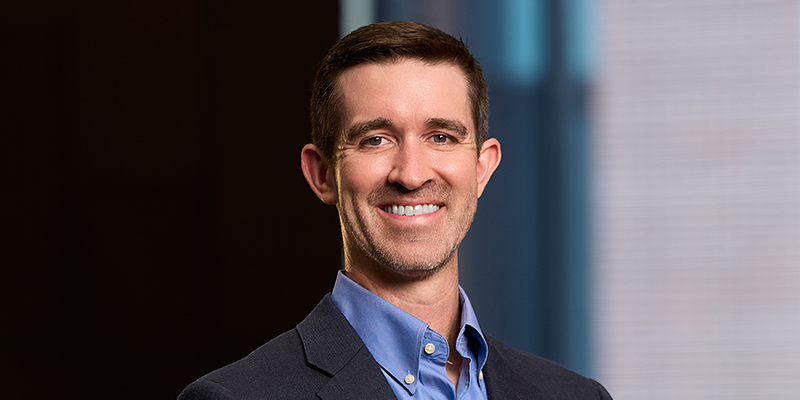
Growing up a son of two professors at a university in Colombia, Carlos Torres, PhD, assistant professor in the Department of Information Systems and Business Analytics at Baylor University’s Hankamer School of Business, originally took the path of practitioner with no intention of joining academia. After receiving his undergraduate degree in computer science, he took a job and lived in places like Sweden, Miami and Washington, D.C., while working in locations all over the world.
This plan was working fine until he was reflecting on his life before undergoing a medical procedure. His wife asked if he had any regrets about life to that point, and Torres had a course-altering moment. Not once, but twice, Torres had been invited to do his PhD work, yet had turned down the opportunity. In that moment, he realized he wanted to pursue advanced studies and research.
After much prayer about the best location for his family, Torres chose a PhD program at Washington State University. When looking at the research and teaching he would do after his PhD, Torres made another values-oriented decision. He could do research in many places, but what location would also allow him the freedom to bring glory to God?
“Many people think scientists are against Jesus – against Christianity,” Torres said. “And yes, some are. Yet some of the greatest researchers and scientists we know of in history were Christians trying to understand God’s creation.”
Torres wanted his work to dive further into the Kingdom of God, conducted in a Christian environment. For Torres, the answer was Baylor.
“I love Jesus and there is nothing that I want more than to honor Him,” Torres said. “I can do that through my science, research and telling the world that science is not against God’s Word or God’s plan for humanity – science can be used to explain it. That’s Baylor’s mission and that’s why I want to be a part of Baylor.”
Initially, Torres thought research was going to be an easy piece of the puzzle. Coming from a practitioner mindset, he believed he would just “go look for things.” When he realized that academic and scientific research was so much more, he embraced the learning curve. Now, conducting research is his life, and he loves it. Baylor has been a place where Torres has found fulfillment researching for the glory of God. Most recently, he has focused on how God’s creation plays into the center of a very modern issue: cybersecurity.
As Torres explains, studies have shown the weakest links in the cybersecurity chain are people. Around 75-80 percent of what can go wrong for cybersecurity in an organization – like data breaches or security events – boils down to human error. Most people aren’t making these mistakes with malicious intent, yet the repercussions of these breaches can harm both individuals and companies.
Organizations invest significant resources in employee security education training and awareness (SETA) programs to avoid such errors, so Torres began to wonder: What can we do to motivate people to do what they are supposed to do and protect their information, which subsequently protects the organization?
Extant research suggests that inciting fear in people about a cyber threat is an effective form of motivation, and it is extensively used in SETA programs. Yet Torres’ faith instilled the belief that we don’t need to live fear-based lives. How could he promote a higher level of attention to cybersecurity without falling back on anxiety, worry and fear as methods?
“It’s about empowering people to take steps in their life through knowledge and information rather than scaring them into action,” Torres said.
One of his recent papers published in one of the top business journals suggests that personal values driving people’s lives are important in the decisions they make related to information security. This finding was significantly noticeable with people working from home (a hybrid environment) more than 50 percent of the time, compared to employees working mostly on-site. His research supports that SETA programs based on showing how dangerous cyber threats are, even though effective, may not be the best alternative for remote employees as people are more driven by what they believe in (personal values). Torres’ research suggests that organizations, particularly those organizations supporting hybrid work environments, should implement different and more personalized SETA programs not only by focusing on fear but also by considering people’s values to decrease the number of potential security events due to human error.
As a researcher and teacher, Torres has taken that finding into the classroom. He began working with students on a twofold approach. First, teaching technical elements of cybersecurity. Second, helping students see how to implement protectionary methods in ways that educate people on why they are taking these extra steps.
“Education culture plays a big role in it,” Torres said.
As people around the globe struggle to make the right decisions with security, Torres’ faith-driven research, coupled with his teaching, will aid in making the world a safer – and less fear-based – place.